A Prayer Built in Red — Fushimi Inari, Kyoto
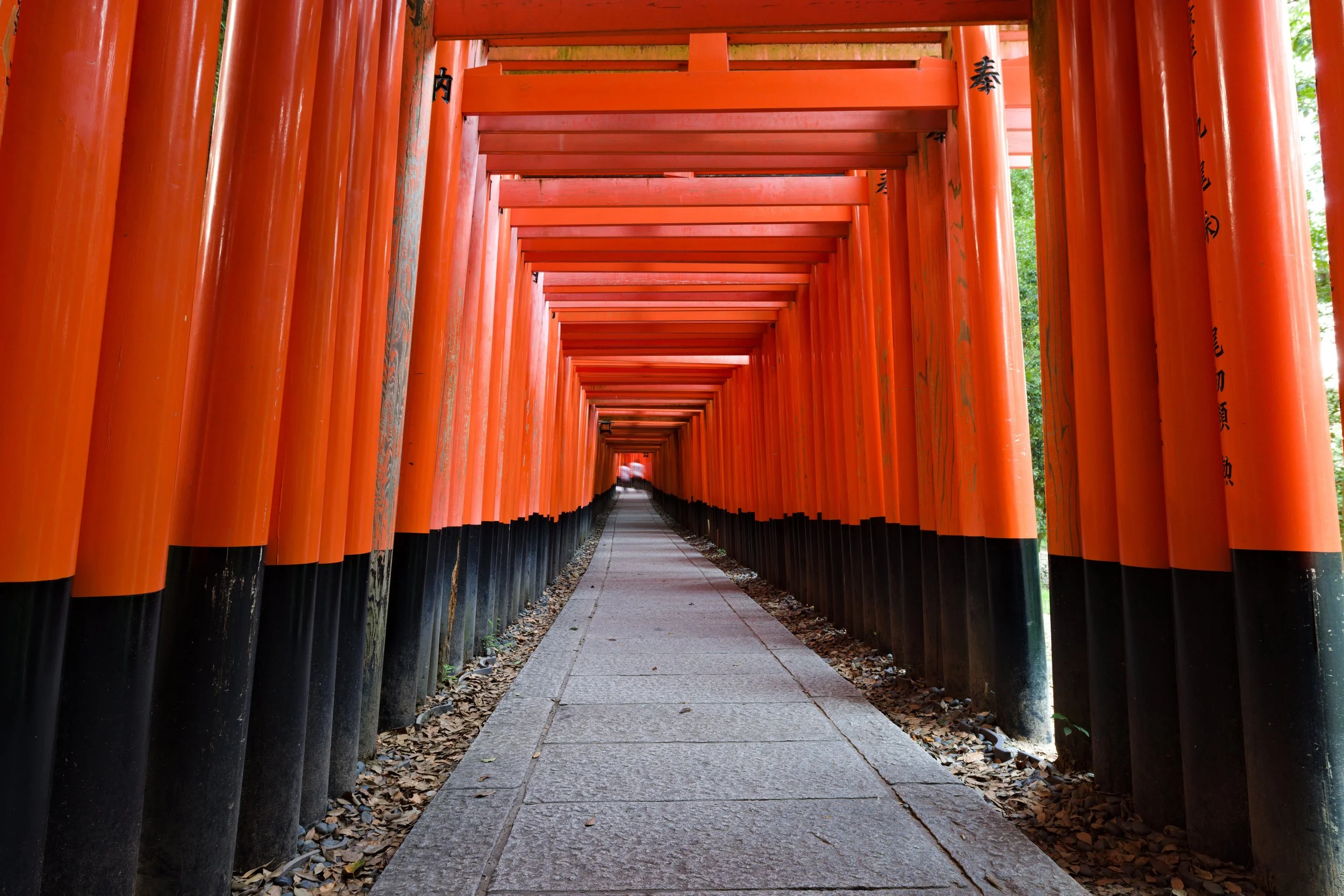
At first, the gates merge into a single surface of vermilion. Then details begin to separate: dark bases, vertical inscriptions, paint that has weathered differently on each post. A stone path cuts a line through the structure and seems to disappear into the red. The photograph offers a strong sense of repetition, but none of these gates is interchangeable.
The Senbon Torii at Fushimi Inari Taisha are individual offerings. Worshippers have dedicated gates to the shrine since the Edo period, giving thanks or offering a prayer along the route through Inariyama. Seen from inside, these separate gestures become a continuous corridor. The image is easy to recognise; the lives behind it remain mostly beyond view.
Near the end of the corridor, a visitor becomes a pale trace. The exposure records enough movement to soften the person while leaving the architecture legible. The result is a place in use. The gates carry acts of devotion across generations, while a passerby needs only a moment to move through them.
Photography can bring these different times into the same frame. Here the gates hold their shape; the visitor almost slips away. Dry leaves gather beside the paving, and daylight enters in narrow spaces between the posts. Those details keep the scene rooted in an actual walk through the shrine, rather than an abstract pattern of red.
Each torii stands on its own. Together, they change the experience of walking, turning the path into a sequence of thresholds. Looking through them from this spot, I find myself thinking as much about the people who offered the gates as about the opening that waits at the end.
